
As spring arrives across the United States, millions of Americans find themselves dealing with itchy, watery eyes and relentless sneezing. If you’re among the more than 81 million people experiencing hay fever allergy eyes this season, you’re far from alone. From tree pollen in the Northeast to grass pollen in the Midwest, spring allergies affect different regions at different times — making outdoor activities and even your daily commute genuinely uncomfortable. At Kvitle Eye Care Associates in Quincy, we know how disruptive hay fever eyes can be, and we’re here to help you understand what’s going on and find some real relief.
What Is Hay Fever and Why Does It Affect Your Eyes?
Hay fever — medically known as allergic rhinitis — is an allergic reaction that occurs when your immune system overreacts to harmless airborne substances. When you breathe in allergens like pollen or mold spores, your body perceives them as a threat and launches a defence response, triggering histamine release. Histamine is a natural chemical your body produces to fight off what it mistakenly identifies as foreign invaders — and unfortunately, your eyes tend to feel the effects quickly.
Your eyes are particularly vulnerable to airborne allergens because of a thin membrane called the conjunctiva, which covers the eyeball and lines the inside of your eyelids. When pollen particles land on the conjunctiva, they trigger inflammation and the uncomfortable symptoms that come with it. Worth noting: unlike a cold, hay fever isn’t contagious — it’s simply your body’s immune response to environmental triggers.
Common Symptoms of Hay Fever Affecting the Eyes
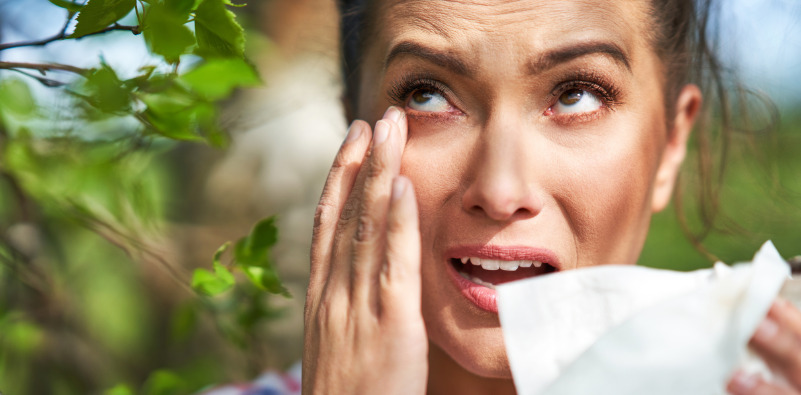
When spring allergies hit, your eyes often bear the brunt of the discomfort. The most common symptoms of hay fever affecting the eyes include:
- Itchy eyes — persistent itching that can be hard to ignore and even harder not to rub
- Redness — blood vessels in the eyes dilate in response to histamine release, causing visible redness
- Watery eyes — excessive tearing is your body’s way of trying to flush out allergens
- Swollen eyelids — inflammation can cause puffiness around the eyes, often most noticeable first thing in the morning
- Burning or gritty sensation — many people describe it as feeling like there’s sand in their eyes
- Light sensitivity — inflamed eyes become more sensitive to bright light, making time outdoors uncomfortable
Symptoms typically affect both eyes at the same time and can fluctuate depending on pollen counts and your level of exposure. For many people, they have a real impact on daily life — not just a minor inconvenience.
Hay Fever vs. Other Eye Conditions: Knowing the Difference
Some eye conditions share similar symptoms to hay fever, so it’s worth understanding the differences before reaching for a treatment.
Hay Fever vs. Dry Eye Syndrome
Both can cause discomfort, but dry eye syndrome typically stems from insufficient tear production or poor tear quality rather than an allergic reaction. Dry eye tends to worsen throughout the day and often responds well to artificial tears, whereas hay fever symptoms tend to spike when pollen counts are high.
Hay Fever vs. Pink Eye (Conjunctivitis)
Allergic conjunctivitis from hay fever is not contagious — but viral or bacterial pink eye is. A few key differences to look out for:
- Eye involvement: Hay fever typically affects both eyes; infectious pink eye often starts in one eye
- Discharge type: Hay fever causes watery discharge, while bacterial pink eye produces thick, yellow or greenish discharge
- Associated symptoms: Hay fever usually comes alongside sneezing and nasal congestion
If you’re unsure which condition you’re dealing with, it’s always worth getting a professional opinion. An accurate diagnosis makes all the difference when it comes to finding the right allergy eye treatment.
How to Soothe Hay Fever Eyes: Practical Tips for Eye Irritation Relief
Finding eye irritation relief doesn’t have to be complicated. Here are some straightforward steps that can make a real difference:
- Avoid rubbing your eyes — as tempting as it is, rubbing triggers more histamine release and worsens inflammation
- Use cold compresses — a clean, cold washcloth applied to closed eyelids for 10-15 minutes can reduce swollen eyelids and ease discomfort quickly
- Wear wraparound sunglasses outdoors — they create a physical barrier between your eyes and airborne pollen, and help with light sensitivity too
- Keep windows closed — use air conditioning at home and in the car rather than opening windows during high pollen counts
- Check daily pollen counts — many weather apps provide this information. Outdoor activities are generally more comfortable after rain or on cooler, less windy days
- Use artificial tears — lubricating eye drops can wash away allergens and provide moisture. Preservative-free options are a good choice if you’re using them regularly
- Try antihistamine eye drops — over-the-counter options designed specifically for allergies can provide targeted relief by blocking histamine at the source
- Shower and change clothes after being outside — grass pollen and other allergens cling to hair, skin, and clothing, so washing off after outdoor time helps keep allergens out of your home
These tips work best in combination — the more you can reduce your overall exposure, the more manageable your symptoms tend to be.
When to See Dr. Kvitle

Many people manage spring allergies well at home, but some signs are worth getting checked out:
- Symptoms that aren’t improving after a week or two of over-the-counter treatment
- Any changes in vision, blurriness, or difficulty focusing
- Significant redness or pain that feels out of proportion to typical allergy discomfort
- Symptoms in only one eye, which may suggest something other than allergies
- Thick or discoloured discharge, which could point to bacterial conjunctivitis
At Kvitle Eye Care Associates, we can help identify the exact cause of your discomfort, rule out other conditions with similar symptoms, and recommend the right allergy eye treatment — including prescription options if over-the-counter products aren’t cutting it.
Find Relief This Spring
Living with hay fever eyes doesn’t have to mean sitting out the best months of the year. Understanding your triggers, keeping an eye on pollen counts, and taking a few proactive steps can make a genuine difference to how you feel day to day.
If your symptoms are persistent or getting in the way of everyday life, we’d love to help. Schedule an appointment with Dr. Kvitle and the team at Kvitle Eye Care Associates — we’ll take the time to understand what’s going on, identify your specific triggers, and put together a plan that works for you. Contact us today to book your eye exam and head into the rest of spring feeling more comfortable.